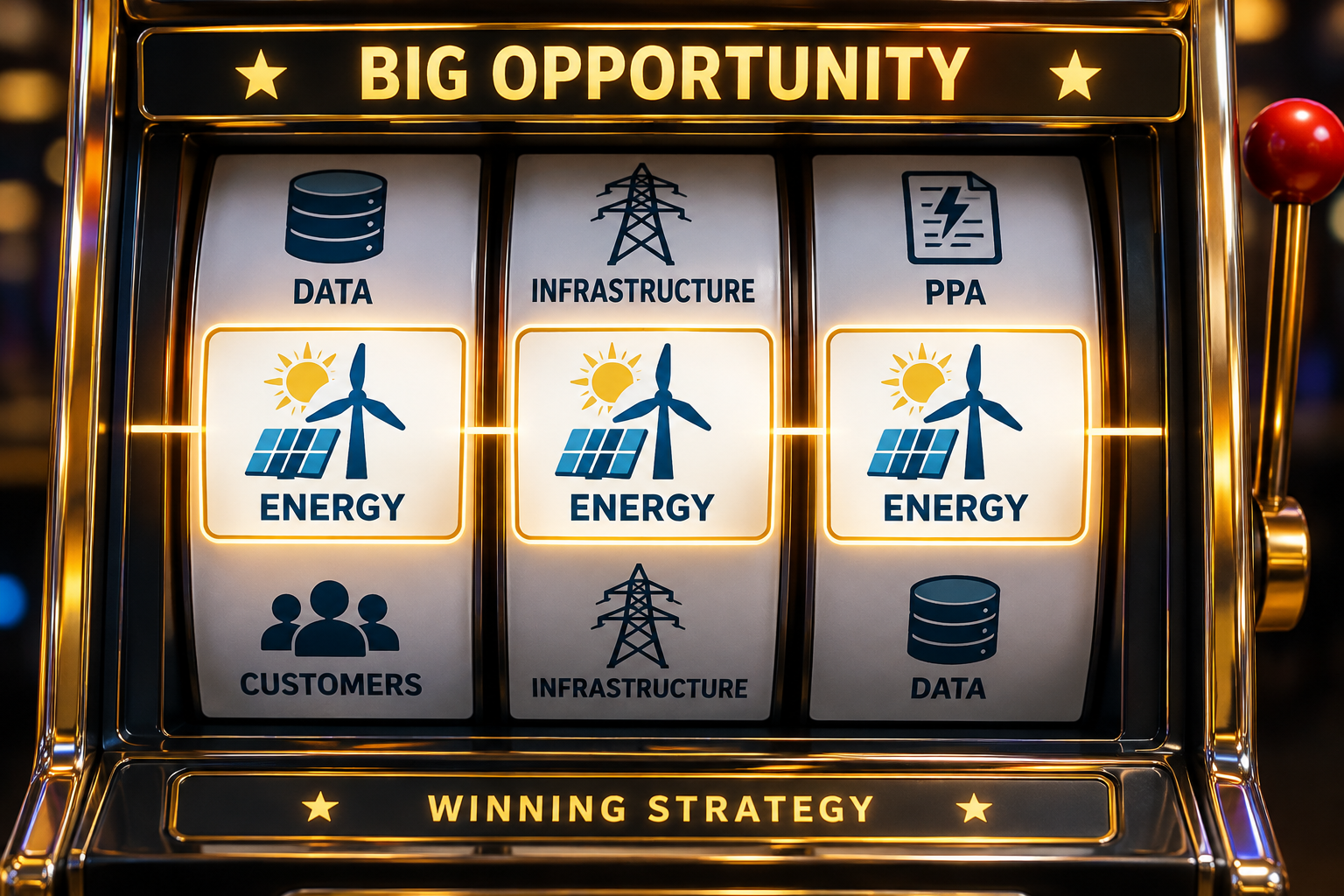
On July 21, BlackRock’s Global Infrastructure Partners, Abu Dhabi’s MGX, and the Nvidia and Microsoft-backed AI Infrastructure Partnership closed their $40 billion acquisition of Aligned Data Centers from Macquarie Asset Management, one of the largest infrastructure buyouts on record. Buried in the closing announcement is the more interesting number: $5 billion in additional growth capital, committed on top of the enterprise value, specifically to scale the platform’s AI-ready capacity.
Where the $5 billion is actually going
Reporting on the deal is consistent on this point. The capital isn’t earmarked for construction schedules or GPU allocation. It’s going to substation build-outs, power purchase agreements, grid-upgrade partnerships and on-site generation. Aligned already operates 6.4+ GW of capacity across 51 campuses in markets like Northern Virginia, Chicago, Dallas, Phoenix and São Paulo. The growth capital isn’t buying more land in those markets. It’s buying a faster path to energised power at each of them.
Land and equipment used to be the constraint. They aren’t anymore.
For the last two years, the bottleneck story in data centre development was land availability and chip supply. Both of those have eased, land through aggressive site acquisition by well-capitalised platforms, chips through Nvidia and its peers scaling production. What hasn’t eased is the interconnection queue. Substation upgrades and transmission capacity run on utility and regulatory timelines measured in years, not the 12 to 18 month build cycle for a data centre shell. A $40 billion consortium with committed growth capital is telling the market, explicitly, that power delivery is now the critical path item, not construction or compute.
This makes data centre developers direct competitors for grid capacity, not just real estate
PPAs, grid-upgrade partnerships and on-site generation commitments aren’t data centre concepts. They’re energy transition concepts, and platforms like Aligned are now competing for the same interconnection slots and utility attention that renewable and storage developers have spent a decade fighting through queues for. The same question is showing up outside the US. Climate Energy Finance’s Tim Buckley has raised it about Zerra DC’s proposed $31.9 billion Western Downs Digital Park in Queensland, a single site that could draw close to a quarter of the state’s daily electricity use: does the capital pour into new firmed generation, or does it draw down capacity that ratepayers already built. Same mechanism, same question, different balance sheet.
The question worth asking isn’t whether AI compute demand justifies a $40 billion price tag. It’s whether the boards and investment committees underwriting this sector have a power procurement strategy as explicit as the one this consortium just funded, or whether they’re underwriting demand growth and assuming the grid connection will show up on schedule.
#DataCentres #EnergyTransition #PowerMarkets #GridInfrastructure #InfrastructureInvestment
Leave a Reply