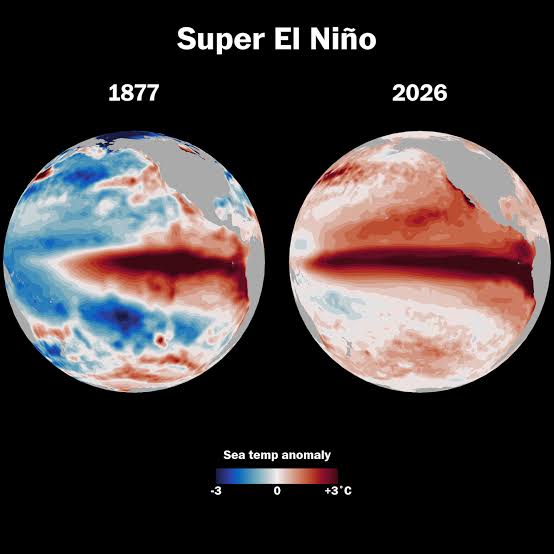
Australian business is already navigating serious economic headwinds. Now add a strong El Niño, confirmed by BOM for summer 2026-27. For boards, that’s a transaction and capex timing issue, not just a weather forecast.
What last summer’s heatwaves cost Europe:
- 180 billion euros, roughly $295 billion, or about 1% of EU GDP, per Triodos Bank
- France hit hardest, with a potential 1.4 percentage point loss in GDP growth that puts the country at risk of contraction
- The Netherlands facing a 0.8 percentage point hit to GDP growth, with Italy and Spain also heavily affected
- Nearly 10,000 excess deaths linked to extreme heat across five countries in June alone, per the World Health Organization
Industries hit in Europe last summer:
- Inland freight and logistics, as record-low Rhine, Danube and Po water levels forced cargo onto roughly 200 trucks per barge
- Agriculture, with 9 million tonnes of grain lost and 2 billion euros in farmer revenue wiped out in the June heatwave alone
- Energy generation, as Hungary’s Paks nuclear plant faced cooling-water restrictions and France saw reactor shutdowns
- Tourism, with river cruises cancelled across multiple countries
- Labour productivity across outdoor and poorly cooled indoor workforces, the single largest driver of the region’s 180 billion euro loss
Australian industries most exposed this summer:
- Agriculture and irrigation in the Murray-Darling Basin, the region CSIRO flags as carrying the highest dry-spring risk
- Energy and grid operators, through heat-driven demand spikes and cooling-water stress on thermal generation
- Rail, freight and logistics, via heat-related speed restrictions and fire-corridor closures
- Insurance and lenders exposed to bushfire and heat-related claims and renewal repricing
- Construction, agriculture and other outdoor workforces, on the labour productivity risk Europe’s experience just quantified
The Bureau of Meteorology declared an El Niño on 16 June 2026, and as of 1 July it has this shaping up as a strong to very strong event, persisting through the second half of the year, peaking over summer and weakening in early 2027. CSIRO’s modelling has equatorial Pacific temperatures running 1-2 degrees above normal, which is enough to shift rainfall and temperature patterns across the whole eastern half of the country. Most directors will read that as a rural affairs story. It isn’t. It’s an infrastructure, supply chain and balance sheet story that happens to start with the weather, and Europe just spent a northern summer proving how expensive that story gets.
Key regions affected
BOM’s July-September forecast points to below-average rainfall across southern and eastern Australia, with above-average temperatures almost everywhere except the north. CSIRO’s Dr Carly Tozer flags where that risk concentrates hardest: northern and southeastern Australia, including the Murray-Darling Basin. Western Australia’s west coast, western Tasmania and the eastern seaboard are largely unaffected.
That distinction matters more than the headline. The Murray-Darling Basin is not a peripheral region. It is Australia’s largest irrigation network and a concentrated point of exposure for any business with agricultural supply chain dependency, from food processors to logistics operators to the regional banks that lend against it.
The cost of one extreme heat wave in Europe
Triodos Bank put a number on Europe’s 2026 summer heatwaves: 180 billion euros, roughly $295 billion, or about 1% of EU GDP. France carries the worst of it, with a potential 1.4 percentage point hit to GDP growth that puts the country at risk of contraction. Italy and Spain aren’t far behind, and the Netherlands is looking at 0.8% off its own growth.
The mechanism matters more than the headline figure. Record-low water on the Rhine, Danube and Po disrupted freight, forcing cargo onto roughly 200 trucks per barge. Cooling-water and infrastructure issues constrained nuclear generation in Hungary and France, pushing reliance onto costlier gas and coal. Agriculture lost 9 million tonnes of grain and 2 billion euros in farmer revenue in the June heatwave alone. But per Triodos, the single largest driver of the total loss was reduced labour productivity, outdoor workers and poorly cooled office staff simply producing less.
These risk areas are core to economic stability. They’re a river, a power grid, a harvest and a workforce, the same four things every Australian board with domestic operations is already exposed to.
The flow-on to value and transactions
Europe’s experience shows the transmission mechanism clearly: physical disruption to a river, a reactor or a paddock shows up within one quarter as a GDP-level and earnings-level number, not a slow-moving multi-year drag. Heat, fire and cyclone exposure show up in due diligence as revenue volatility for agriculture, energy and infrastructure-linked targets, in higher insurance premiums and renewal risk, and in cost-of-capital assumptions that get stress-tested harder by acquirers and lenders once a strong El Niño is on the record. Assets with concentrated exposure to the Murray-Darling Basin, to industrial processes dependent on cooling water, to freight networks running through fire-prone corridors, or to cyclone-exposed coastal and northern operations carry a different risk profile in a deal this year than they did in a neutral ENSO year. That should show up in earn-out structures, in the timing of capital raises and settlements relative to peak fire season (typically December to February), and in how boards brief acquirers or investors on forward earnings.
What this means for the board agenda now
Four things worth putting on the table this quarter. First, stress-test FY27 forecasts against BOM’s own seasonal outlook windows rather than historical averages, particularly for any business with agricultural, water-dependent, energy generation or fire-corridor infrastructure exposure. Second, get insurance renewal timing and water storage positions in front of the board now, not in the annual risk review cycle. Third, ask whether workforce heat management, for outdoor crews and for offices without adequate cooling, is actually a line item anywhere, given Triodos found it was Europe’s biggest single cost driver. Fourth, if a transaction or capital raise is scheduled to land during peak summer, check whether the deal timetable and the disclosure to counterparties reflect the seasonal risk window, or whether it’s been modelled on an average year that this year isn’t.
One observation I’ll add outside the data above. The cost this piece describes isn’t just natural variability. It’s a natural cycle riding on top of a warming baseline, and that baseline is the part within our control. Curbing global warming won’t stop El Niño arriving, but it is the one lever that stops each cycle costing more than the last. Boards that treat climate mitigation as someone else’s portfolio are underwriting the same growth-eroding trend Europe just priced at 180 billion euros.
The question worth asking isn’t whether this El Niño will disrupt some part of the Australian economy this summer. BOM and CSIRO have already told you it will, somewhere in the eastern half of the country, and Europe has just shown what that disruption costs when it isn’t priced in ahead of time. It’s whether that risk is sitting inside the transactions, capital decisions and forecasts your board is signing off on right now, or whether it’s been left outside the model until it shows up in next year’s numbers.
#ElNino #ClimateRisk #BoardGovernance #SupplyChain #InvestmentStrategy
References: Bureau of Meteorology, “El Niño: what it means for Australia’s climate,” bom.gov.au, 1 July 2026. CSIRO, “Expert commentary: El Niño,” csiro.au, June 2026. ABC News, “Summer heatwaves in Europe are hurting the economy,” abc.net.au, 24 August 2026.
Leave a Reply