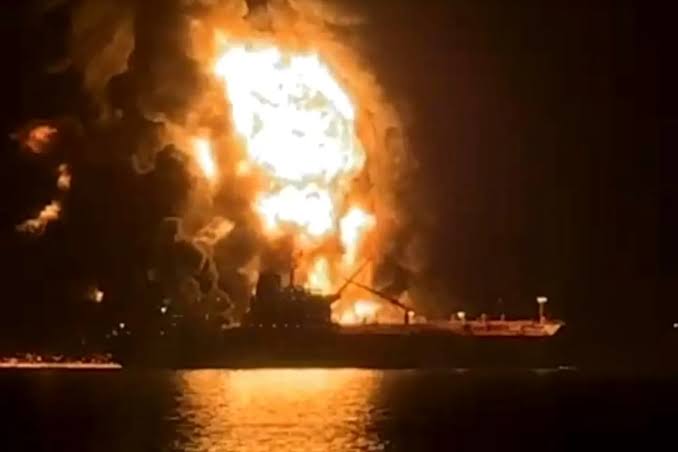
Six months into the 2026 Iran war. The Strait of Hormuz still effectively closed to Western allied shipping. Iraq’s pro Iranian militias and US Israeli strikes locked in a slow burning exchange that won’t quite die down. The question worth asking is how long this needs to run before it actually changes how Australian industry and households fuel themselves.
A short, sharp oil shock gets absorbed, grumbled about, and forgotten. A long one restructures capital allocation. And the 2026 Iran war, now well past its original 40 day active phase, through a collapsed Pakistan brokered ceasefire, a US naval blockade, and an Iraqi militia front that keeps flaring back to life, is starting to look like the latter. Here’s what that means for the pace of electrification, and for the complementary bet Australia is quietly placing on low carbon liquid fuels.
Why a prolonged war accelerates electrification
Oil price volatility on its own doesn’t shift technology adoption much. Businesses and households ride out a spike and wait for it to pass. What actually changes behaviour is volatility that stops looking temporary. Once diesel and petrol price risk gets recategorised from a one off event to a recurring feature of doing business, electrification stops being a sustainability initiative. It becomes a hedge. And hedges get funded out of very different budget lines, much faster than sustainability projects ever do.
A few channels where this is already showing up:
- Fleet and freight operators run vehicle replacement cycles of three to five years. A war that’s still live when the next replacement decision comes due tips the calculation toward EVs and hybrids on fuel cost risk alone, no climate mandate required.
- Households feel petrol spikes directly and repeatedly at the bowser. It’s one of the few inflationary pressures people can partly opt out of by switching technology, unlike rent or groceries. Repeated spikes compound the signal.
- Behind the meter solar, batteries and electrified heat become an energy security play for exposed businesses, not just a decarbonisation one. They insulate operations from a fuel market nobody in Canberra controls.
- Policy gets easier to justify. “Cut our exposure to a foreign war” is a far shorter sentence for Treasury than “meet our emissions targets,” and it tends to unlock funding faster.
So how long is long enough?
There’s a reasonably identifiable threshold here. Not a single day, but a duration band.
Under three months: absorbed as a price spike. Westpac’s modelling of a one to three month Hormuz disruption puts the CPI impact at roughly one to 1.5 percentage points at the peak. Real, but not long enough to shift a fleet replacement or capex decision already scheduled on its own timeline. Businesses hedge with fuel surcharges, not technology switches.
Three to nine months: this is where the war currently sits, and where the psychology starts to shift. Oxford Economics’ prolonged war scenario has oil holding above US$150 a barrel for four months, with global inflation pushing toward 2022 crisis levels. At this point procurement teams start treating fuel volatility as a live budget cycle risk rather than a one off adjustment. The next annual capex round gets written with it in mind.
Beyond nine to twelve months, through at least one full budget cycle: this is the real inflection point. Once a war outlives an entire fiscal year, it stops being modelled as an exceptional event in board papers and starts being baked into base case assumptions for the following three to five years. That’s when fleet electrification targets, industrial heat electrification, and household EV incentives shift from nice to have if the oil price cooperates, to standard planning assumptions. Given the current trajectory, a conflict now past 160 days with no durable ceasefire and militia activity still flaring, Australia is arguably already entering that window. If the conflict is still live at its one year mark in February 2027, expect electrification commitments across freight, mining and household vehicle policy to harden fast, echoing how the 1970s oil shocks permanently reshaped vehicle efficiency standards and fuel diversification policy through the decade that followed.
The parallel track: low carbon liquid fuels
Electrification isn’t the whole answer, and Australian policy already reflects that. Aviation, heavy freight and mining are sectors where full electrification is either technically unready or decades away. Batteries don’t work for long haul aviation. Heavy haul mining trucks are nowhere near full electrification at scale. That’s exactly the gap low carbon liquid fuels are built to fill.
Australia has been building this pathway independently of the war, but a prolonged conflict gives it the same urgency boost as electrification:
- The federal government’s A$1.1 billion Cleaner Fuels Program is backing domestic production of renewable diesel, sustainable aviation fuel (SAF) and e fuels, with eligibility finalised and applications opening through 2026.
- The 2026 27 Budget’s new demand side LCLF measure complements that supply side support, creating bankable demand certainty that industry (GrainCorp among others) has flagged as the missing piece for investment.
- Australia’s feedstock base is a genuine structural advantage. Roughly 80% of the canola crop is currently exported unprocessed, much of it ending up in other countries’ renewable fuel supply chains instead of our own. Sector modelling suggests domestic LCLF production could displace close to a fifth of fuel imports by 2040, and nearly half by 2050, if refining capacity catches up to feedstock potential.
- Projects already underway, including Jet Zero Australia’s SAF facility, the Virgin Australia and Qatar Airways North Queensland SAF plant, and Viva Energy’s marine biofuel trials, are early evidence the investment case is moving, not just theoretical.
A war that keeps crude and shipping costs elevated for a year or more strengthens the economics of every one of these projects. It closes the price gap LCLF needs to close against fossil alternatives, and it hardens the fuel security argument already doing a lot of the political heavy lifting in Canberra.
The net picture
Electrification and low carbon liquid fuels aren’t competing responses to this war. They’re the same response, aimed at different parts of the fuel task. Passenger vehicles and light freight go electric. Aviation, heavy haul and marine lean on SAF, renewable diesel and e fuels. What a prolonged Iraq war does, more than anything, is compress the timeline on both. My call: if the conflict is still unresolved past its one year mark, expect the shift in Australian industry and policy to stop being incremental and start being structural.
#IraqWar #IranWar2026 #Electrification #EnergySecurity #EnergyTransition #SustainableAviationFuel #LowCarbonFuels #Decarbonisation #AustralianIndustry #Inflation #OilPrices #CapitalAllocation #NetZero #CleanEnergy #Biofuels
Leave a Reply